
 EN
EN



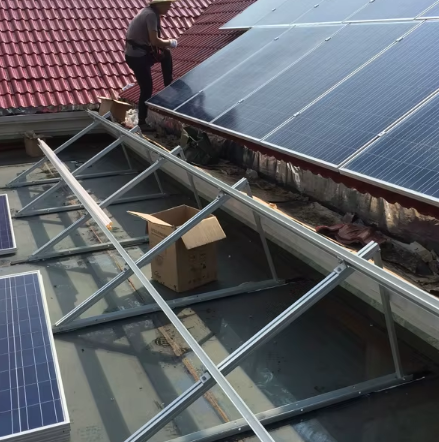
Why Solar Mounting Is the Critical Foundation for Commercial PV Performance
The mounting systems used in photovoltaic installations form the foundation for all solar projects, affecting how much power gets generated, how long the system lasts, and ultimately what kind of money it makes back. While solar panels and inverters get most of the attention, these mounting structures actually have to handle real weather stress. When engineers don't properly calculate things like wind resistance or snow weight, entire installations can fail spectacularly. According to research from NREL released last year, each major failure incident costs around 740 thousand dollars. Good quality solar mounting isn't just about holding panels up straight either. There are really three important roles these systems need to perform if a solar project wants to succeed both technically and financially.
- Optimal sun capture, achieved through precise tilt and azimuth alignment—boosting energy harvest by 15–25% versus suboptimal installations
- Structural resilience, engineered to withstand 120+ mph winds, seismic activity, and heavy snow accumulation
- Long-term protection, using corrosion-resistant materials like anodized aluminum to ensure integrity across 25+ year lifespans
When mounting systems go wrong, commercial operators run into all sorts of problems at once. Production can drop by over 10% just because things aren't aligned properly, and then there's the whole mess with roof damage that wipes out warranties too. According to various engineering reports, roughly one third of commercial solar projects that don't perform well enough actually have their issues traced back to poor quality racking systems. For companies really committed to cutting down on carbon emissions, getting this part right matters a lot. If the racking isn't up to standard, those shiny new solar panels might not cut emissions as expected. Instead of being valuable green investments, they could end up sitting there doing nothing while money keeps flowing out for maintenance and repairs.
Key Types of Solar Mounting Systems for Rooftop and Ground-Mount Applications
Commercial solar installations require specialized mounting solutions tailored to site conditions. Understanding the core differences between rooftop and ground-mount options ensures optimal energy production and structural integrity.
Ballasted vs. Penetrative Rooftop Mounts
Ballasted systems use weighted blocks to secure panels without roof penetration—ideal for flat commercial roofs where membrane integrity is critical. Penetrative mounts anchor directly to structural supports, providing superior wind resistance (up to 150 mph compliance) but requiring professional sealing to prevent leaks. Key considerations:
- Ballasted avoids roof compromises but demands higher roof load capacity
- Penetrative offers maximum stability for sloped or high-wind sites
- Non-penetrating options reduce installation time by 30% (NREL 2023)
Single-Axis vs. Fixed-Tilt Ground-Mount Structures
Fixed-tilt systems position panels at regionally optimized angles, delivering reliable performance with minimal maintenance. Single-axis trackers follow the sun’s path, increasing annual energy yield by 15–25% (NREL 2023), though they entail greater mechanical complexity. Critical factors:
- Fixed-tilt suits budget-conscious projects with consistent space availability
- Tracking systems maximize ROI in high-electricity-cost regions
- Both require geotechnical analysis for foundation design
- Corrosion-resistant materials ensure 25+ year service life
Engineering & Compliance Essentials for Solar Mounting in Commercial Projects
Wind/Snow Load Calculations and Local Code Alignment
Getting structural integrity right starts with accurate calculations for wind and snow loads specific to each installation site. When engineers overlook these environmental factors, problems happen. According to research published by Ponemon in 2023, around one out of every five documented solar system failures was actually caused by underestimating these forces. That's why good engineering practice involves checking local building regulations against international standards like IEC 61400. But there's more to consider too. Seismic risks, how much rain falls in different seasons, and what kind of terrain surrounds the installation all matter greatly. Making sure everything meets NEC Article 690 requirements along with whatever local laws apply isn't just paperwork. It really does help speed things along during permitting and keeps projects on schedule instead of running into unexpected holdups later on.
UL 2703, IEC 61215, and Structural Certification Requirements
Getting proper certifications means knowing if something will stay safe, work well with other systems, and last over time. The UL 2703 standard checks that electrical connections are solid and resistant to rust problems. Meanwhile, IEC 61215 looks at whether materials can handle extreme temperature changes, withstand hail damage, and support their own weight without failing. According to SolarTech Review from last year, solar projects without these important marks end up paying around 40 percent more for insurance coverage. When talking about systems meant to operate for 25 years straight, third party verification becomes absolutely essential. This includes checking things like how thick the aluminum alloys are, what kind of force fasteners can take before breaking, and how well coatings stick to surfaces through all kinds of weather conditions.
| Certification | Focus Area | Testing Requirement |
|---|---|---|
| UL 2703 | Fire Safety & Grounding | 2,000-hour salt spray corrosion test |
| IEC 61215 | Mechanical Endurance | 1,000 thermal cycles (-40°C to 85°C) |
| AS/NZS 1170 | Wind Loads | Simulated 150 mph wind tunnel testing |
Maximizing ROI Through Smart Solar Mounting Selection and Lifecycle Planning
O&M Accessibility, Corrosion Resistance, and 25+ Year Durability
Durable mounting systems protect ROI by minimizing lifetime operational costs. Components with zinc-aluminum-magnesium coatings or stainless-steel hardware resist salt spray and industrial chemical exposure—preventing structural degradation that triggers $740k in average annual unplanned repairs (Ponemon 2023). Three proven design features extend system lifespans beyond 25 years:
- Accessible layouts, enabling module-level maintenance without full array disassembly
- Galvanic isolation, preventing electrolytic corrosion between dissimilar metals
- Wind load resilience, delivered via reinforced clamps rated for 140 mph gusts
These features reduce Levelized Cost of Energy (LCOE) by 18% compared to standard systems, according to 2024 field studies across industrial solar farms.
Integration with Tracking, BIPV, and Future System Expansion
Forward-looking ROI hinges on mounting system interoperability with emerging technologies. Single-axis tracker compatibility allows retrofitting existing fixed-tilt arrays—boosting yield by up to 25% without full reinstallation. Pre-engineered Building-Integrated Photovoltaic (BIPV) interfaces enable seamless facade or canopy integration, unlocking previously unused real estate. For phased expansion:
- Modular rail systems accept additional rows without structural modifications
- Universal channel profiles accommodate next-gen 700W+ modules
- Dynamic load reserves support future battery or hydrogen storage integration
Projects incorporating these flexible features achieve 22.7% ROI versus 15.9% for static installations—scalable designs defer capital expenditure while preserving long-term energy growth potential.
Table of Contents
- Why Solar Mounting Is the Critical Foundation for Commercial PV Performance
- Key Types of Solar Mounting Systems for Rooftop and Ground-Mount Applications
- Engineering & Compliance Essentials for Solar Mounting in Commercial Projects
- Maximizing ROI Through Smart Solar Mounting Selection and Lifecycle Planning