
 EN
EN



Why Commercial Projects Demand Custom Solar Mounting Systems
Rooftop structural constraints and site-specific load requirements
Putting solar panels on commercial rooftops brings some pretty unique engineering headaches that just can't be solved with off-the-shelf solutions. The differences between commercial and residential setups are night and day when it comes to structural considerations. Take warehouse structures for example older ones might barely hold up under 25 pounds per square foot of live load, whereas newer buildings typically manage around 50 or even more. That's why we see so many custom mounting systems these days they rely on detailed load calculations to spread weight properly across the roof without stressing the structure beyond its limits. Safety is obviously a major concern here, but getting this right also means avoiding costly repairs down the road from improper installation.
Flat roofs benefit from ballasted systems since they don't require drilling holes through the surface, but these systems need proper weighting usually around 3 to 5 pounds per square foot so they won't overload the building structure. When dealing with sloped roofs though, wind becomes a major concern. The brackets used there have to handle serious force, sometimes over 120 miles per hour in places where hurricanes are common. Things get even trickier when there are obstacles already on the roof such as air conditioning units or skylights. Installers then have to figure out creative ways to mount equipment that still gets good solar exposure while making sure everything stays securely attached and doesn't damage the roof underneath.
Regulatory compliance, local codes, and utility interconnection standards
When installing custom solar mounts, there's no getting around all those local rules and utility guidelines that come into play. Take California for instance where Title 24 sets strict fire safety distances between panels and roof edges ranging anywhere from three to six feet. Down in Florida things get even trickier because of those hurricane zones. Mounting systems there actually need to survive some pretty intense wind tests according to ASTM E330 standards. And let's not forget about coastal regions either. Salt air eats away at equipment over time so manufacturers have to use special corrosion resistant materials that can handle ASTM G154 salt spray testing if they want their installations to last through multiple seasons without failing.
The rules around connecting to utility grids make things even more complicated for developers. When projects exceed 1 megawatt, they typically need to comply with IEEE 1547-2018 standards for grid stability. These requirements really shape how systems get designed and what components end up being selected. Speaking of design choices, adjustable tilt mechanisms that range between 15 degrees to 30 degrees aren't just nice to have either. They actually matter when it comes to getting regional capacity credits, especially in areas served by PJM markets. And let's be honest, nobody wants their project stuck in limbo. A recent study from NREL in 2023 showed just how big of a problem compliance issues can be. About a quarter of all commercial solar installations ran into serious permitting delays last year, sometimes waiting more than half a year simply because their mounting designs didn't meet the required standards.
Core Engineering Dimensions of Custom Solar Mounting Systems
Tilt, orientation, and height optimization for energy yield and maintenance access
Maximizing energy output hinges on precise tilt, orientation, and spacing. South-facing arrays set at latitude-optimized tilt angles generate 15–25% more energy than flat-mounted systems. Adjustable tilt mechanisms can increase seasonal production by an additional 5–10%.
Getting the right distance between rows helps avoid panels shading each other while still letting air circulate around them for natural cooling. Technicians need enough space to work safely too. Most installers aim for at least 18 inches from the ground so there's room to clean underneath and perform regular maintenance tasks. Advanced software now lets engineers map out exactly where shadows will fall throughout the day based on local topography and solar movement patterns. And when we factor in actual wind conditions from that specific location, structures built higher off the ground can handle pretty strong winds, sometimes even up to 130 miles per hour, all while keeping their efficiency intact. This kind of detailed planning makes a big difference in long term system reliability.
Material selection: Aluminum vs. steel, corrosion resistance, and lifespan in commercial environments
Material choice directly impacts durability, cost, and suitability. Aluminum offers excellent corrosion resistance and is 40% lighter than steel—making it ideal for retrofitting older rooftops with limited load capacity. While more expensive upfront, aluminum requires no protective coatings and typically lasts 30+ years.
Galvanized steel provides superior strength at a lower initial cost, making it well-suited for ground-mounted systems in high-wind or heavy-snow regions. However, its longevity—typically 25+ years—depends on proper hot-dip galvanization and C5-rated coatings in aggressive environments. Both materials meet UL 2703 safety standards when correctly engineered.
| Property | Aluminum | Galvanized Steel |
|---|---|---|
| Corrosion Resistance | Excellent (no coating needed) | Good (dependent on zinc thickness) |
| Lifespan | 30+ years | 25+ years |
| Cost Impact | Higher material cost | Lower upfront cost |
| Best For | Coastal/high-humidity sites | Heavy snow/wind regions |
Site-Specific Design Integration for Reliable Solar Mounting System Performance
Roof type, age, and anchoring strategy (ballasted, penetrating, or hybrid)
The anchoring approach must align with roof type, age, and structural condition. Penetrating mounts offer strong stability but may require reinforcement on aging roofs or compatibility assessments for single-ply membranes. Ballasted systems avoid penetrations entirely, relying on calculated weight distribution—ideal for newer, structurally sound flat roofs.
Hybrid systems combine limited penetrations with ballast to balance load distribution on complex retrofits, such as older warehouses. These tailored strategies ensure structural safety while maximizing usable roof space.
Adapting to obstructions, shading, topography, and soil bearing capacity
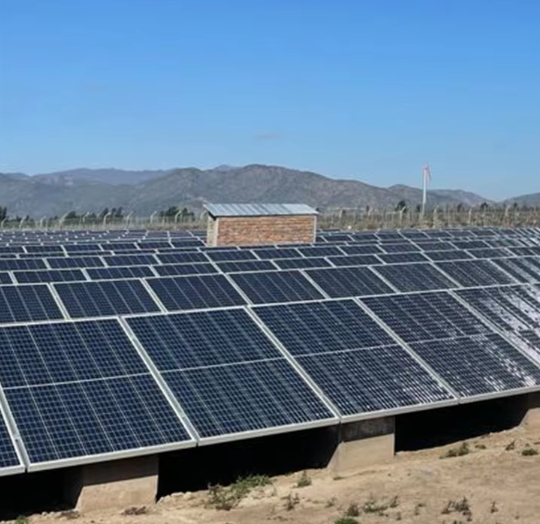
Ground-mounted systems require detailed site analysis to overcome environmental variables. Shading simulations guide panel placement around vents, equipment, or nearby structures to maintain consistent energy output. On uneven terrain, tilt and row spacing are adjusted to follow topography while minimizing grading costs.
For soil-dependent foundations, bearing capacity tests determine the need for driven piles or helical anchors—especially in loose or expansive soils. Maintenance access routes are integrated into the overall layout to ensure long-term serviceability without disrupting operations.