
 EN
EN



Match Solar Mounting System Type to Site and Business Objectives
Roof-Mounted, Ground-Mounted, and Specialty Solar Mounting Systems (Carports, Pole-Mounts)
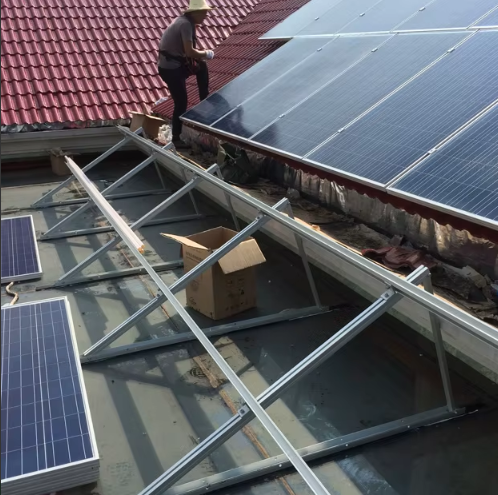
When it comes to commercial solar installations, there are basically three main ways to mount panels. For buildings with flat roofs, installers either place weights around the panels or drill through the surface to secure them. Sloped roofs work differently since they can attach directly to existing materials like metal seams, tiles, or asphalt shingles. Ground mounts make sense for large open spaces where solar farms operate, allowing technicians to adjust panel angles precisely and even incorporate tracking systems that follow the sun throughout the day. Some creative solutions exist too, such as turning parking lots into power generators with solar carports, or using pole mounts when space is tight but digging foundations isn't feasible. Each approach has its own set of challenges worth considering before installation begins. Roof mounted systems save money on land but need engineers to check building strength first. Ground arrays require proper site preparation including grading the earth and getting all necessary permits. Carport installations demand careful planning regarding height restrictions and how weight will be distributed across structures.
Cost, Energy Yield, Scalability, and ROI Trade-Offs by Solar Mounting System Type
Selecting a solar mounting system involves critical financial and operational trade-offs:
- Cost: Ground systems average 15% lower hardware expenses than carports but incur land preparation and civil work fees. Roof installations avoid land acquisition yet may require structural reinforcement.
- Energy Yield: Tracking ground systems boost output by 20–25% versus fixed-tilt roof arrays; carports face shading variability from vehicles and adjacent structures.
- Scalability: Ground mounts allow modular expansion across contiguous parcels, while roof and carport systems are constrained by existing infrastructure dimensions and load capacity.
- ROI: Ground arrays in high-irradiation zones typically achieve payback in 5–7 years—but roof systems benefit from streamlined permitting and zero land entitlement timelines.
| Factor | Ground-Mount | Roof-Mount | Carport |
|---|---|---|---|
| Upfront Cost | Low-Medium | Medium | High |
| Yield Potential | High | Medium | Medium-Low |
| Land Impact | High | None | Low |
| Scalability | High | Limited | Moderate |
ROI projections must weigh local incentives, terrain, and utility rate structures—ground systems in optimal sites commonly deliver 12–15% internal rates of return, outperforming specialty mounts by 3–5 percentage points.
Verify Structural and Environmental Compatibility of the Solar Mounting System
Roof Type and Condition Assessment: Standing Seam, Tile, Flat, and Shingle Integration
Different types of roofs call for specific mounting solutions that maintain both structural strength and keep water out where it shouldn't be. For standing seam metal roofs, clamp based attachments work well since they don't punch holes through the surface. Tile roofs typically need special hooks attached to rafters that spread the load over several layers of tiles. Flat roofs generally rely on heavy ballast systems calculated to withstand strong winds according to building codes like ASCE 7-22. When dealing with shingle roofs, the mounts should integrate with flashing and have sealed fasteners so no water gets in behind them. Anyone planning an installation should check how old the roof is, what shape the materials are in, and how much longer it might last. Roofs over 10 to 15 years old usually need some kind of professional evaluation before adding anything extra. According to industry reports, about two thirds of problems with solar installations on roofs come from poor integration, which ends up costing around 40 percent more in maintenance each year.
Wind Load, Snow Load, and Corrosion Resistance: Material Selection (Aluminum vs. Galvanized Steel) and Local Terrain Requirements
Environmental forces dictate material selection and design parameters. Aluminum offers superior corrosion resistance in coastal regions, demonstrating 30-year salt-fog resilience per ASTM B117 testing. Galvanized steel provides higher static load capacity—critical in snow-prone areas requiring 60 psf snow load ratings. Wind exposure varies significantly by terrain:
| Factor | Urban/Suburban | Coastal/Open Plains |
|---|---|---|
| Wind Uplift | ≤ 110 mph | ≥ 130 mph |
| Foundation Depth | 4 ft | 6+ ft |
When working on building projects, engineers rely on ASCE 7-22 standards to figure out those tricky calculations for uplift forces, structural drift, and twisting loads. They then adjust how dense the bracing needs to be and how deep anchors should go based on these numbers. For buildings in mountain areas, special attention goes to creating designs that can handle sudden wind bursts which create lots of torque. Down in floodplain regions, construction teams typically go with raised steel frames made from galvanized material, applying extra thick coatings for better protection against corrosion. The advantages of using aluminum become really apparent in earthquake-prone areas too. Since aluminum weighs about 35 percent less than steel, it puts significantly less strain on the supporting framework during seismic events, making structures safer overall.
Validate Installation Feasibility and Long-Term Integrity
Load Capacity Analysis: Purlin Spacing, Bracing Needs, and Non-Penetrating vs. Penetrating Attachment Methods
Thorough load capacity analysis ensures long-term performance under environmental stress. Confirm purlin spacing aligns with panel layout and structural spans—intervals under 5 feet improve load distribution in heavy-snow regions. Bracing requirements intensify in high-wind zones; cross-bracing or knee-braces mitigate lateral racking during extreme events.
| Attachment Method | Structural Impact | Maintenance Considerations |
|---|---|---|
| Non-Penetrating | Spreads load via ballast | Zero roof compromise; eliminates leak risk |
| Penetrating | Anchors directly to substructure | Requires sealant inspection every 3–5 years |
When dealing with older or delicate roofing materials, non-penetrating systems work well, though they require careful calculations regarding ballast weight. This includes accounting for things like how strong winds might lift the panels and what happens when temperatures change over time. Penetrating mounts generally provide better protection against uplift forces, which makes them the go to option when there's no room for heavy ballast weights. But these installations come with their own headaches during setup and will need regular checks down the road. Coastal areas present special challenges too. Anyone working on projects near saltwater should definitely look at using corrosion resistant aluminum instead of standard galvanized steel. The numbers tell the story pretty clearly actually galvanized steel tends to lose around 15 percent of its strength after just two decades exposed to salty air. And let's not forget all those regulations either every design needs to meet both local building requirements and the ASCE 7 guidelines for wind and snow loads.
Maximize Lifecycle Value with Warranty, Aesthetics, and Future-Proofing
Warranty Alignment Between Solar Mounting System Hardware and PV Modules
Matching the warranty period for solar panel racks with the standard 25 year coverage on photovoltaic modules makes financial sense and saves money down the road. When these warranties don't line up properly, system owners face surprise expenses if components fail before their time. For instance, aluminum frames tend to last well beyond 25 years even in harsh coastal environments where salt air eats away at equipment. Galvanized steel alternatives might need attention sooner though, sometimes requiring repairs or replacements halfway through the expected lifespan. Smart buyers should look for companies that provide comprehensive warranties backed by independent testing organizations. These guarantees should address not just how long the structure stands but also protect against rust and degradation issues that can silently compromise performance over time.
Aesthetic Integration and Modular Scalability for Phased Commercial Solar Mounting System Deployments
When solar panels blend into their surroundings through low profile designs and matching colors, communities tend to accept them much better, particularly when they're installed where people can see them. According to a recent SolarTech study back in 2023, almost two thirds (that's 68%) of all commercial solar projects faced delays during permitting because neighbors didn't like how they looked. The good news is modular mounting solutions allow businesses to start small first. Maybe kick things off with something around 100 kW capacity before expanding up to full 1 MW operation later on. Best part? There's no need to completely rebuild support structures or redo foundation work as the system grows. This kind of incremental growth strategy protects financial investments over time as energy needs change, keeps everything looking consistent visually across different phases, and saves money upfront since companies don't have to commit to massive expenditures right away.
FAQ
What are the main types of solar mounting systems?
The main types of solar mounting systems are roof-mounted, ground-mounted, and specialty systems like solar carports and pole mounts.
What factors influence the selection of a solar mounting system?
Factors include cost, energy yield, scalability, return on investment, structural and environmental compatibility, and the specific conditions of the installation site.
Why is it important to consider the structural condition of a roof before installing solar panels?
The structural condition of a roof is crucial because it needs to be able to support the additional weight and loads of the solar panels without compromising the building's integrity.
How do environmental factors impact material selection for solar mounting systems?
Environmental factors such as wind load, snow load, and corrosion risk determine whether materials like aluminum or galvanized steel are more suitable for a particular location.