
 EN
EN



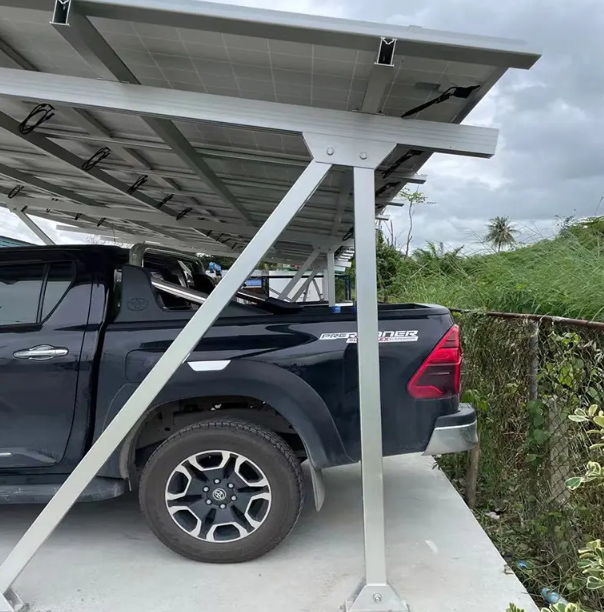
Structural Integrity and Site-Specific Engineering for Commercial Solar Carport Deployment
Load-Bearing Capacity, Wind/Snow Load Compliance, and Galvanized Steel Framing Standards
Solar carports built for commercial use need to go beyond basic structural standards if they're going to last through years of weathering. The best choice? Galvanized steel frames that resist corrosion and follow ASTM A123 standards instead of those old ASIC Manufacturing Standards we no longer use. These frames support solar panels that weigh between 3 and 5 pounds per square foot, plus handle whatever wind and snow comes their way. Engineering specific to each site isn't optional either. Wind resistance needs testing against gusts reaching 130 mph locally, while snow load capacities should match or beat what ASCE 7-22 requires for different regions, around 30 pounds per square foot in colder areas for instance. Proper cross bracing, strong connections between components, and solid foundation work all help prevent collapses. This matters a lot since industry data from 2023 shows most structural problems come from footings that were too small or inadequate wind protection measures. Following codes like IBC, ASCE 7-22, and any local regulations isn't just good practice it's essential throughout the entire design process.
Site Assessment Essentials: Soil Stability, Grading, Drainage, and Minimum Vertical Clearance Requirements
Getting a good look at the ground conditions before construction starts isn't just something to check off the list, it's absolutely necessary. When dealing with soils that expand a lot (over 10% expansion) or can't support much weight (less than 2,000 pounds per square foot), we usually end up needing deeper foundation systems like piles or helical piers. These solutions tend to bump up construction costs around 15 to 20 percent. Good site preparation matters too. We need about a 1 to 2 percent slope moving away from buildings, plus proper drainage features such as French drains, catch basins, or permeable paving stones. This helps prevent water pressure from building up under the foundation which can cause serious problems over time. Also important is keeping at least 14 feet of space underneath solar panels. This meets Federal Highway Administration standards for emergency vehicles to pass through and allows panels to be angled correctly for maximum power generation. According to FHWA reports, most commercial carport failures happen because of poor drainage issues or weak soil compaction. That's why getting independent geotechnical assessments done and running tests after compaction work completes are so crucial steps before breaking ground on any project.
Commercial Solar Carport Types, Configurations, and Energy Yield Optimization
Single-Slope, Dual-Slope, and Canopy-Style Solar Carports: Use-Case Alignment and kWh/kWp Performance Comparison
Configuration selection directly shapes energy output, land use efficiency, and functional adaptability:
- Single-slope designs (8°–15° tilt) maximize space efficiency on constrained urban sites with north-south orientation, delivering 1,100–1,250 kWh/kWp annually in moderate climates. Their streamlined profile minimizes steel use but demands precise inter-row spacing to avoid shading losses.
- Dual-slope systems, with opposing panel planes angled for seasonal sun capture, boost winter production by 15–25% versus single-slope equivalents—making them ideal for snow-prone or high-wind zones where structural compliance with ASCE 7-22 snow loads (up to 3.6 kN/m²) is paramount.
- Canopy-style carports, featuring elevated, vertically oriented bifacial modules, leverage ground albedo to achieve up to 1,500+ kWh/kWp. Though requiring ~20% more structural steel, their open architecture accommodates large vehicles—including trucks and buses—under standard 14-foot clearances.
| Design | Best For | Annual Yield (kWh/kWp) | Space Efficiency |
|---|---|---|---|
| Single-Slope | Urban lots < 50 spaces | 1,100–1,250 | ◉◉◉◉ |
| Dual-Slope | Snow/wind zones (≥90 mph gusts) | 1,300–1,450 | ◉◉◉◎ |
| Canopy | Logistics hubs, fleet parking | 1,400–1,500+ | ◉◉◎◎ |
System Sizing Guidance: Matching Solar Carport Capacity (50 kW–2 MW+) to Parking Footprint and Load Profiles
When it comes to system sizing, matching what physically fits with actual energy needs matters more than chasing theoretical maxima. For smaller setups ranging from 50 to 200 kilowatts, these systems generally power around 20 to 80 parking spots through panels rated at 350 watts to 450 watts each. They can cut down on electricity costs for building lights and level two electric vehicle chargers by roughly 30 to 50 percent. Larger installations handling over 500 parking spaces and generating two megawatts or more usually need about five acres of space. These bigger projects involve connecting at medium voltage levels, installing transformers, and setting up proper meters from the utility company. Such setups can handle upwards of 85 percent of energy demands for places that consume lots of power like warehouses or factories. Important factors when determining size include looking at how much power gets used on site throughout the day, understanding local electricity pricing rules including those time-based rates, and anticipating future growth in electric vehicle fleets. Going overboard with system capacity past 110 percent of yearly kilowatt hour needs often leads to lower financial benefits because of restrictions on excess energy credits, plus might result in expensive upgrades just to connect everything properly.
Financial Viability, Integration, and Streamlined Commercial Deployment of Solar Carports
EV Charging Co-Location, Grid Interconnection Pathways, and Utility Partnership Strategies
Putting EV charging stations under solar carports turns ordinary shade structures into actual power generators that work for both vehicles and the grid. With bidirectional chargers installed, fleets can charge using solar power during the day while also helping balance grid loads at peak times. This cuts down on those expensive demand charges and saves businesses around 15 to 25 percent on operating costs according to recent 2024 utility studies. Getting these systems connected properly depends heavily on talking to utilities early in the game. The smart approach involves looking at different rate plans together, figuring out how to split infrastructure costs fairly, and making sure everyone's schedules align. When companies actually sign proper partnership agreements with their local utility company, they typically get approval for connections 30 to 60 days faster than projects that go it alone without any formal arrangements.
Permitting Roadmap, Incentives (IRA Tax Credits, Bonus Depreciation), and EPC Selection Criteria
Getting permits done efficiently begins with having those standard design packages that meet all building codes. The pre-submitted structural and electrical plans really cut down how long cities take to review applications. We've seen carport designs that are specifically built for this purpose get approved about 22% quicker compared to ones that need custom engineering work. For commercial solar installations, there's actually a pretty good financial angle too. Projects can claim the full 30% federal tax credit through IRS section 48, along with additional state incentives ranging from 10 to 20% depending on location. Plus, thanks to the Inflation Reduction Act, businesses get to deduct 60% of costs in the first year alone. When it comes time to pick an EPC contractor, look for companies with NABCEP PV Installation Professional certification first. They should also have at least five actual solar carport projects completed already. Don't forget to ask for real client testimonials, make sure contracts clearly state who owns the incentive documents, and always check if their structural engineers are licensed in the specific state where the project will be located.
FAQ
What are the key factors for ensuring the structural integrity of commercial solar carports?
Key factors include using galvanized steel frames that comply with ASTM A123 standards, ensuring wind resistance up to 130 mph, matching snow load capacities per ASCE 7-22 requirements, and incorporating proper cross bracing and solid foundation work.
Why is site assessment essential before starting solar carport construction?
Site assessment is crucial to evaluate soil stability, address grading and drainage needs, and ensure minimum vertical clearance requirements are met to prevent potential construction failures.
What types of solar carport designs are available, and how do they differ in terms of use cases and energy yield?
There are single-slope, dual-slope, and canopy-style designs. Single-slope designs are ideal for urban sites, dual-slope systems suit snow-prone zones, and canopy-style carports accommodate large vehicles and leverage ground albedo for higher energy yields.
How does system sizing impact solar carport projects?
System sizing should match the parking footprint and load profiles, focusing on actual energy needs to optimize financial benefits and avoid unnecessary upgrades.
Are there incentives available for commercial solar carport installations?
Yes, projects can claim a 30% federal tax credit through IRS section 48 and benefit from state incentives. The Inflation Reduction Act allows for a 60% cost deduction in the first year.