
 EN
EN



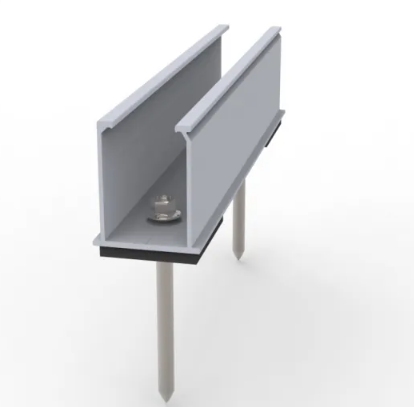
Key Solar Rail Selection Criteria: Load, Clamping, and Compatibility
Structural Integrity: Load Calculations and Spanning Capabilities
Solar rail systems must withstand environmental forces while maintaining panel alignment. Critical load calculations include:
- Dead loads: Combined weight of panels, rails, and accumulated snow (up to 50 lb/ft² in northern climates)
- Live loads: Wind uplift forces exceeding 90 mph in coastal regions
- Seismic stresses: Lateral movement requirements in earthquake-prone zones
The way supports are spaced depends largely on spanning capabilities, and most aluminum rail profiles can handle spans between four to eight feet. Going beyond what manufacturers recommend can lead to serious problems since deflection should stay below one two-hundred-and-fortieth of the actual span length. When this happens, it not only violates local building regulations but also causes panels to shift out of alignment over time. For older buildings built before 1980, commercial projects needing more than twenty kilowatts of power, or areas prone to harsh weather conditions, getting a professional engineer involved becomes absolutely necessary. These specialists understand how different materials behave under stress and can ensure everything stands up against whatever Mother Nature throws at it.
Panel Interface: Clamping Design, Frame Spacing, and Orientation Flexibility
Clamping systems secure panels to rails while accommodating manufacturing variances in frame dimensions. Key considerations:
- Clamp compatibility: Must match 30–50 mm panel frame thickness without causing microcracks
- Frame spacing tolerance: ±2 mm adjustment range prevents stress concentration
- Orientation flexibility: Systems allowing landscape-to-portrait switching enable layout optimization
Modular rail designs with tool-free connectors reduce installation time by 30% compared to fixed systems. For mixed-module installations, adjustable mid-clamps maintain uniform pressure across varying frame heights. Grounding integration through direct clamp-to-rail contact points mitigates potential induced degradation (PID), preserving long-term panel output.
Roof Type–Driven Solar Rail Requirements and Mounting Strategies
Matching Rails to Asphalt, Tile, Metal, and Flat Roof Systems
What kind of roof we're dealing with really determines what type of solar rail system makes sense. For asphalt shingle roofs, installers generally go with low profile rails that come with built-in flashing so water doesn't sneak in where the panels penetrate the roof surface. Tile installations present their own challenge since the mounting hardware needs special hooks that hold onto the tiles without causing cracks or damage over time. Metal roofs are another story entirely. Most metal roofs work best with non penetrating clamps that fit into the standing seams, though some corrugated panels require corrosion resistant fasteners instead. And let's not forget about wind resistance requirements in hurricane prone areas these days, where specs often call for systems rated above 120 pounds per square foot according to ASCE 7-22 standards. Flat roofs usually rely on ballast based systems that spread out around 3 to 5 pounds per square foot across the surface to protect the roofing membrane while still allowing proper panel tilt for maximum sun exposure depending on local conditions.
Waterproofing Integration and Fastening Methods by Roof Material
Getting good waterproofing done right depends heavily on what materials we're working with. For asphalt roofs, contractors typically go with butyl sealants and those stepped flashing pieces that actually lock into place with the shingles themselves. Tile systems take a different approach altogether, relying on these compression fit membranes installed underneath the tile hooks for water protection. Metal roofs have their own tricks too. Some use EPDM gaskets around penetrations while others skip the whole penetration issue entirely by going with clamp based systems instead. According to Roofing Contractor Magazine from last year, this newer method cuts down on leaks by about 92% compared to older techniques. And don't forget flat roofs either. These often need proper drainage mats placed beneath railings so water doesn't just sit there creating problems. Plus, they require special fasteners controlled by torque settings to make sure membranes aren't getting compressed beyond safe limits.
Railed vs. Rail-Less Mounting: Trade-Offs in Performance and Deployment
There are basically two main types of solar mounting systems out there these days: the old school railed setups and newer rail-free options. With railed systems, long metal rails run across different parts of the roof creating a solid base to hold all those solar panels in place. These setups work well because they create standard layouts and spread weight evenly across the structure. On the flip side, rail-less systems skip the extra hardware altogether, attaching panels straight onto special mounts on the roof itself. This cuts down on materials needed by about three quarters and makes shipping containers way less crowded too. When it comes to actual performance, the traditional railed approach is still king when dealing with big commercial installations where every inch of panel placement matters. But don't count rail-less out just yet. These newer systems actually handle weight distribution better than their predecessors by around a quarter, plus they fit right into tricky roof shapes that would drive installers crazy otherwise.
Deployment trade-offs reveal significant contrasts:
- Cost Efficiency: Rail-less installations lower shipping expenses by 60–70% and reduce labor time by 30%, yielding up to 40% overall savings.
- Logistical Simplicity: A 750 kW railed system requires semi-trucks for transport; equivalent rail-less components fit in a pickup bed.
- Adaptability: Rail-less solutions navigate rooftop obstacles without custom cuts—but may require specialized engineering validation for structural integrity.
Railed systems remain preferred for high-wind regions or uniformly sloped roofs, while rail-less excels in retrofits with space constraints or irregular surfaces.
Top Solar Rail Brands and Application-Specific Solutions
K2, Unirac, IronRidge, SunModo, and SnapNrack: Comparative Strengths and Ideal Use Cases
When selecting a solar rail system, leading manufacturers differentiate through specialized capabilities:
- Heavy-Duty Applications: One provider dominates extreme-load scenarios with patented rail designs and eight-foot spanning strength—ideal for snow-prone or high-wind regions.
- Wire Management Innovation: Another excels in cable organization with open-channel rails and snap-in retention clips, cutting residential installation time by 30%.
- Low-Profile Efficiency: A third offers ultra-slim rails for aesthetic-focused installations, compatible with lightweight panels on tile roofs.
- Universal Adaptability: Multiple brands provide modular kits for varied roof types, featuring tilt-adjustable feet and pre-assembled components to accelerate deployment.
- Cost-Effective Scaling: One manufacturer's standardized connectors and rail lengths cut material waste by 15%, benefiting large commercial arrays.
For critical infrastructure, industry surveys show heavy-duty systems reduce maintenance costs by 22% over a decade. Meanwhile, residential installers prioritize adaptable designs that accommodate diverse panel orientations and roof conditions.
FAQ
What factors are essential when selecting solar rails?
Key factors include load calculations, compatibility with panel frames, clamping design, and waterproofing for the specific roof type.
How do different roof types affect solar rail installation?
Roof types such as asphalt, tile, metal, and flat roofs require specific rail systems for waterproofing and durability.
What are the benefits of rail-less solar mounting systems?
Rail-less systems offer cost efficiency, reduced material usage, and adaptability to irregular roof shapes.
Which are some top brands for solar rail systems?
K2, Unirac, IronRidge, SunModo, and SnapNrack are leading brands offering specialized solutions for varied applications.