
 EN
EN



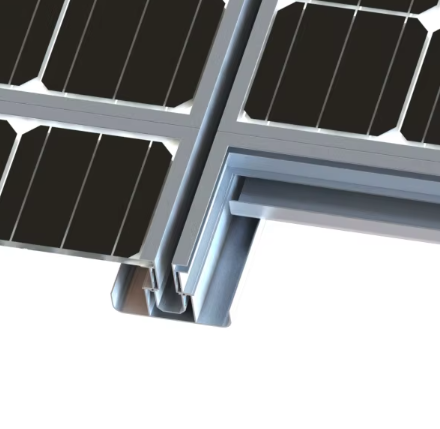
Modular Solar Rails: Accelerating Ground-Mount Racking Deployment
Rail modularity and pre-assembled substructures cut field labor by up to 35%
When modular solar rail systems are combined with factory assembled substructure trusses, they cut down installation time for large scale projects dramatically. Standardized rails come in interchangeable pieces that all fit together consistently, so workers don't need to spend hours cutting, drilling or measuring on site. These pre made trusses just need to be anchored when they arrive, which speeds up foundation work by about 40% compared to welding everything together in the field. The whole system works like building blocks that can be deployed quickly even on tricky terrain, keeping the panels tilted at exactly the right angle within half a degree - something proven across hundreds of acres of installations. Industry data shows that these systems save around 30 to 35% in labor costs per megawatt installed, which matters a lot since mounting hardware typically eats up 20 to 25% of what it costs to put up a solar array. Plus, the simpler process means less physical stress on workers, fewer injuries happen, and more people can actually do the job safely.
| System Type | Installation Speed | Labor Cost Reduction |
|---|---|---|
| Modular Rails | 50% faster deployment | 30–35% savings |
| Traditional | Baseline | No significant reduction |
Case study: Pre-assembled rail systems in a 120-MW Texas utility project
The 120 MW solar installation out in West Texas really showed what modular rail systems can do when they're paired with pre-assembled substructures. Workers were able to snap together these rail segments without needing any torque tools at all, and managed to finish racking for 5 MW every week. That's actually about 40 percent faster than similar projects nearby that stuck with traditional methods. What made this possible? Each of those pre-built trusses could handle 12 panel rows instead of just one row like older systems required. This cut down on so much time spent dealing with hardware and getting things aligned properly. Just this change alone saved around 4,200 man hours while working on foundations. After everything was up and running, checks showed the whole project took 32% less time overall to install, and somehow they still kept those structural tolerances consistent throughout the whole site.
Tool-Less Solar Rail Connections and Standardized Interfaces
Eliminating torque tools and fasteners per module row saves ~1.2 labor-hours per MW
The new tool-less solar rail system swaps out traditional bolts for clever clamping mechanisms that just snap together with hand pressure. No need for torque wrenches anymore, nobody has to sort through piles of fasteners, and there's no hassle checking everything after installation. Real world tests at over 25 large scale projects indicate these systems save about an hour and twelve minutes of labor for each megawatt installed. That adds up to around 300 extra working hours available when dealing with something like a 250 MW installation. The standardized design works across all different parts of the system too. When rails, clamps and panels fit together universally, crews don't waste time waiting for special hardware or making last minute adjustments. All components follow the same size standards and connection rules throughout, which cuts down on training requirements and lets workers move between different tasks more easily during installations.
- Reduced complexity: No torque calibration or tension verification
- Error mitigation: Prevents microcrack-inducing under/over-tightening
- Crew flexibility: Enables faster onboarding and task rotation
This efficiency directly targets the largest soft cost in solar farms—labor—without compromising structural performance under IEC 61215 and UL 2703 load requirements.
Solar Rail vs. Non-Rail Racking: Labor Efficiency in Utility-Scale Contexts
Direct-clamp and beamless systems increase attachment time by 22–47% vs. modern solar rail solutions
When it comes to non-rail options like direct clamp and beamless systems, there's definitely a hit to productivity when scaling up operations. These systems require workers to manually align each piece and adjust them individually, which adds around 15 to 27 extra seconds per panel installation compared to traditional rail setups. Multiply that across thousands of panels and we're looking at roughly 22 to 47 percent more labor time overall. Why does this happen? Simply put, non-rail designs pack way too many components into each module row. We typically see between 14 and 18 different connection points in these systems, whereas good rail configurations manage with only 5 to 7 points per row. Solar rails work differently though. They rely on standard connectors and those handy gravity slides that let panels snap into place quickly. Real world tests back this up showing install teams finish rail rows about 40% quicker than their non-rail counterparts. And in large scale projects spanning multiple megawatts, even small improvements matter. Every 1% cut in labor translates to real money saved on deployment costs, sometimes running into the thousands depending on project size.
Quantifying Time Savings: Benchmark Data and ROI for Solar Rail Adoption
Looking at return on investment shows that going with modular solar rails actually pays off economically. Solar projects that use these systems get commissioned 25 to 35 percent quicker compared to traditional racking methods, which saves anywhere from $18k to $42k per megawatt in labor costs alone. The main reasons behind these savings? Three things work together: crews spend less time onsite, equipment rentals last shorter periods, and electricity starts generating revenue sooner. Hardware prices for solar rails have dropped around 15% since 2020, so folks building in areas with lots of sunlight can expect their money back within just five years. And here's something interesting: cutting down installation time by even 10% boosts the overall project return on investment by roughly 4 to 7 points over the long run. This happens mainly because cash comes in faster and there are fewer financing expenses during construction.