
 EN
EN



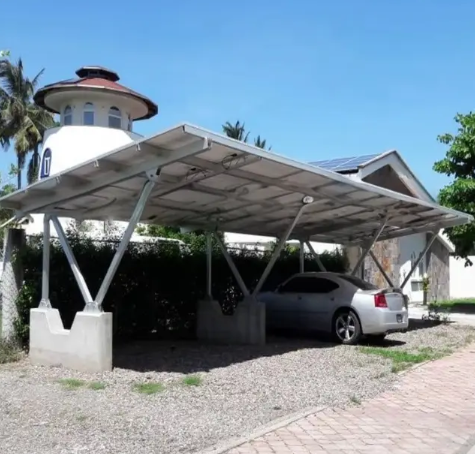
Why Solar Carports Are a Smart Investment for Enterprises
Advantages of Solar Carports Over Rooftop Solar for Commercial Properties
Solar carports actually perform better than regular rooftop setups because they serve two purposes at once parking cars and producing electricity. Rooftop installations often need extra support structures and fight for space with heating and cooling systems, but solar panels on carports make good use of areas we already have without needing to buy new land. The numbers back this up too commercial projects tend to get about 18 percent more power from these installations since the panels get full sunlight and there's plenty of air moving around them, which helps keep them running efficiently.
Energy Cost Savings and Brand Sustainability Signaling
Businesses can cut their energy bills anywhere from 35 to 60 percent when they install solar panels and take advantage of those net metering credits. Plus, having solar arrays right there on site really helps boost their environmental credentials. According to some research from Pivot Energy last year, around three out of four consumers actually favor companies that have renewable energy systems installed at their locations. The combination of saving money on operations while also standing out in the marketplace explains why so many retail stores and big office complexes are getting interested in solar carports these days. They offer real benefits both financially and reputation-wise for organizations looking to modernize their facilities.
Calculation of return on investment: Why solar cars will have returns within 5-7 years
Commercial solar installations typically cost around $2.50 to $4 per watt these days, and businesses can get back about 30% of those costs through federal tax credits. Most companies see their investment paid off in roughly six to seven years. According to BrightEye Solar's latest return on investment calculations for 2024, a 500 kW system should generate over $1.2 million in net present value across twenty years when factoring in energy savings and accelerated depreciation under MACRS rules. Plus, various state-level green energy programs are making these returns even faster. What's really attractive is that once installed, businesses lock in stable electricity prices for at least 25 years, which helps with long term budget planning and protects against rising utility rates.
Planning and Site Requirements for Commercial Solar Carports
Space Efficiency and Land Use Optimization in Enterprise Parking
Solar carports maximize land utilization by converting underutilized parking lots into renewable energy assets. Unlike ground installation systems that require dedicated land, carports utilize existing asphalt pavements, which is a key advantage for businesses with limited space. This dual-use method preserves 96% of the original parking capacity (2023 Commercial Solar Index) while generating electricity.
Minimum Space Requirements and Layout Adaptability for Single and Double Row Systems
A standard single row solar carport requires a 9-foot wide parking space to accommodate vehicles and panel tilt, while a double row configuration requires 18-24 feet for two-way traffic. The system adapts to irregular footprint through modular design -12% of commercial facilities use curved or angled layouts to match site constraints.
Engineering Design and Material Selection for Durability
Load Capacity and Structural Stability Under Wind and Snow Conditions
Designing solar carports involves creating structures strong enough to handle snow weights between 30 to 50 pounds per square foot, plus withstand winds over 90 miles per hour in coastal areas where these installations are common. The frame needs to spread out the load properly across the whole structure, but also allow for small angle adjustments of around 2 to 5 degrees so the solar panels can be positioned optimally. Recent testing in 2024 showed that when using steel reinforcement, these systems barely bend at all even when subjected to loads 50% higher than what they're designed for. This kind of stability becomes really important when scaling up to larger commercial or industrial applications where structural integrity cannot be compromised.
Durability, Maintenance, and Corrosion Resistance of Materials
In high salinity areas, galvanized steel systems require recoating every 12 to 15 years, while powder coated aluminum can maintain integrity for over 20 years with minimal maintenance. The key protection methods include:
- Sacrificial anode systems for steel joints
- Epoxy primers for coastal installations
- Modular replacement designs for high-wear components
Five Critical Components of High-Performance Solar Carports
- Dual axis installation system: seasonally adjust panel angles without structural stress
- Impact resistant photovoltaic glass: capable of withstanding hail with a diameter of up to 1.5 inches (ASTM D1037)
- Rainshed design optimized for drainage: preventing 85% of snow/water accumulation
- Modular electrical conduit: allows for expansion without rewiring
- Grounding system: can maintain<5 even after 20 years of exposure © The resistance
According to the 2024 engineering benchmark, a robust design can reduce lifetime maintenance costs by 19% -27% compared to traditional parking structures.
Integrating EV Charging and Energy Management Systems
EV Charging Integration With Solar Carports: Powering the Future of Fleet Management
Today's solar carports are becoming something more than just shade structures they're doubling up as electric vehicle charging points, especially useful for businesses that run lots of cars. When companies install these systems alongside Level 2 chargers, they typically cut down on about half to three quarters of their fleet charging expenses. Plus, this setup means less reliance on the regular power grid according to some research published last year in Frontiers in Energy Research. The combination works pretty well actually because it lets parking areas generate electricity while people charge their vehicles right there. For many forward thinking organizations, this kind of setup makes sense both environmentally and financially since it turns underused space into productive assets that save money month after month.
Sizing Solar Carport Arrays to Support Concurrent EV Charging Demand
To get a 50 car solar carport system up and running, we're generally looking at around 250 kW of solar power needed just to handle 20 electric vehicles charging at once without pulling from the grid. That math works out because each charger typically needs about 7.5 kW on average. When designing these systems, engineers often use energy modeling software to figure out how many panels can fit in each parking spot while still allowing enough room for cars underneath. Most installations aim for somewhere between 6 and 8 kW worth of panels per space. Take a warehouse in Phoenix as a case study there they installed a massive 400 space carport system that generates an impressive 1.2 megawatts of electricity. During those hot Arizona afternoons when the sun is blazing overhead, this setup can actually power around 120 EVs charging simultaneously right under their own solar powered shelter.