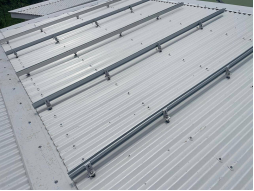

Standing seam solar flashing is a specialized waterproofing component designed to seal gaps between solar panel mounting hardware and standing seam metal roofs, preventing water intrusion while maintaining the roof’s structural integrity. Standing seam roofs—characterized by raised, interlocking metal seams—require non-penetrative mounting to avoid damaging the roof’s natural water barrier, making flashing a critical element in these installations. Typically crafted from 0.032–0.063-inch thick aluminum (or copper for premium applications), standing seam solar flashing is engineered to match the roof’s seam profile, with a contoured base that fits snugly over the seam and a vertical flange that connects to solar mounting rails. This design creates a watertight seal, channeling rainwater and melting snow away from the mounting point. The flashing’s surface is often pre-finished with a PVDF coating to resist corrosion, UV degradation, and color fading, ensuring compatibility with the roof’s lifespan (30–50 years). Installation involves clamping the flashing to the standing seam using non-penetrative clamps, eliminating the need for roof punctures that could cause leaks. Many models include EPDM gaskets or butyl tape between the flashing and roof, enhancing the seal and accommodating thermal expansion/contraction of both the roof and solar components. Compliance with industry standards such as ASTM B209 (for aluminum) and UL 1897 (for flashing) ensures durability and performance. For installers, standing seam solar flashing simplifies retrofitting solar systems on existing metal roofs, as it works with most seam heights (1–3 inches) and metal types (steel, aluminum, zinc). By bridging the gap between solar hardware and standing seam roofs, this flashing ensures long-term system reliability, protects the building from water damage, and preserves the roof’s warranty—making it an indispensable component in metal roof solar installations.